

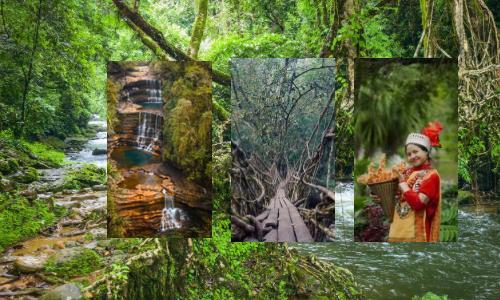
Meghalaya: Culture, Community, and Tourism – A Journey into the Abode of Clouds
Tucked away in the far northeastern corner of India lies Meghalaya, the “Abode of Clouds.” With its rolling green hills, mysterious caves, mist-laden valleys, and crystal-clear rivers, Meghalaya is not just a destination — it’s an experience that weaves together rich culture, close-knit communities, and breathtaking natural beauty.
Whether you’re an adventure seeker, culture enthusiast, or nature lover, Meghalaya has something to offer for everyone.
1. A Tapestry of Tribal Culture
Meghalaya is home to three major tribal communities — the Khasi, Jaintia, and Garo — each with its own language, customs, and traditional practices. What makes these communities truly unique is their matrilineal system, where family lineage and inheritance are traced through the mother’s line. Women play a central role in social and family life.
Key Cultural Highlights:
• Shad Suk Mynsiem (Khasi): A spring festival that celebrates gratitude and the spirit of the people through traditional dance and music.
• Wangala (Garo): Known as the “100 Drums Festival,” this vibrant event celebrates harvest and honors the Sun God.
• Behdeinkhlam (Jaintia): A traditional festival seeking protection from evil and disease, full of colors, rituals, and communal harmony.
The people of Meghalaya still preserve oral storytelling, traditional music, folk dances, and handwoven attire as part of everyday life. It’s a culture deeply rooted in nature, community, and respect.
⸻
2. Community Living and Social Structure
Unlike many other regions in India, caste divisions are absent in Meghalaya. Instead, social life revolves around clans and village councils that operate under customary laws. Each tribe has its own unique governance system and traditions.
• Khasi & Jaintia clans are governed by community heads and elders, with deep respect for customs and rituals.
• Garo society, though also matrilineal, follows a more decentralized structure focused on village-level leadership.
Villages work together, sharing resources and responsibilities. This strong sense of community cooperation and equality is reflected in everything from festivals to everyday farming practices.
⸻
3. Meghalaya’s Tourism – A Paradise for Explorers
Meghalaya has rapidly emerged as a top destination for eco-tourism and cultural immersion. From cloud-draped valleys to sacred forests, the state offers unforgettable experiences.
Must-Visit Destinations:
• Shillong – The bustling capital known for colonial charm, local music, and scenic beauty.
• Cherrapunji & Mawsynram – Rain-soaked wonders famous for living root bridges, waterfalls like Nohkalikai, and hidden caves.
• Dawki & Shnongpdeng – Crystal-clear waters of the Umngot River, ideal for boating, kayaking, and riverside camping.
• Mawlynnong – Asia’s cleanest village, known for its eco-tourism model and bamboo sky walk.
• Laitlum Canyon – A panoramic viewpoint and trekker’s paradise near Shillong.
• Sacred Groves of Mawphlang – Forests protected by tribal beliefs, showcasing indigenous spirituality and biodiversity.
Unique Experiences:
• Tribal Homestays – Stay with local families and learn about their day-to-day life.
• Cultural Walks – Explore traditions, food, and crafts with a local guide.
• Local Cuisine – Try dishes like Jadoh (rice with meat), Dohneiiong (pork curry), and fermented soybean dishes.
⸻
4. Responsible Tourism in Meghalaya
The people of Meghalaya are highly conscious of their environment and heritage. Travelers are encouraged to:
• Respect tribal customs and traditions.
• Travel sustainably — use fewer plastics and support local businesses.
• Engage with locals through homestays and village tours.
• Avoid disrespectful behavior in sacred sites or during festivals.